Repurposing old machinery is one of the most satisfying ways to breathe new life into forgotten equipment. Recently, I took on a quirky challenge: transforming an old refrigerator compressor into a functioning 2-stroke engine. While compressors and engines share some mechanical similarities, the conversion is far from straightforward — it’s a blend of engineering creativity, mechanical adaptation, and a dash of patience.
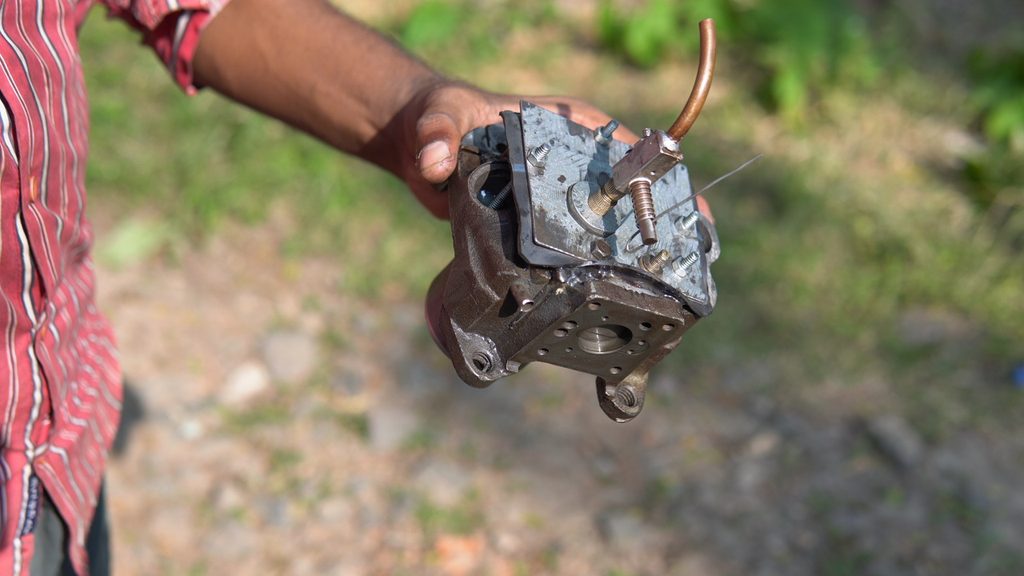
Why a Fridge Compressor?
Fridge compressors are robust, precision-built machines designed to pump refrigerant under pressure. They already have a crankshaft, piston, and cylinder — the basic ingredients of an internal combustion engine. The challenge lies in adapting them to handle fuel combustion instead of refrigerant compression.
The Concept
A 2-stroke engine completes a power cycle in just two piston movements:
- Compression & Power Stroke – Fuel-air mixture is compressed and ignited.
- Exhaust & Intake Stroke – Burnt gases are expelled while fresh mixture enters.
The fridge compressor’s sealed crankcase and single piston make it a good candidate for experimentation, but it needs modifications to handle intake, exhaust, and ignition.
Key Modifications
- Cylinder Head Adaptation: The original sealed head is replaced or modified to fit a spark plug and allow combustion.
- Intake & Exhaust Ports: Openings are created for fuel-air intake and exhaust release, timed to the piston’s movement.
- Crankcase Sealing: Since 2-stroke engines rely on crankcase pressure for intake, sealing and lubrication adjustments are essential.
- Fuel Delivery: A small carburetor or fuel injector is adapted to feed the mixture into the cylinder.
- Cooling Considerations: Unlike compressors, engines generate much more heat, so cooling fins or airflow channels are added.
Challenges Faced
- Timing Precision: Ensuring intake and exhaust happen at the right moment is tricky.
- Lubrication: 2-stroke engines mix oil with fuel, but compressors use separate lubrication — this had to be rethought.
- Material Strength: The compressor’s internal parts must withstand higher temperatures and pressures than they were designed for.
The Result
After careful planning and safe workshop practices, the converted compressor roared to life. It wasn’t going to power a motorcycle anytime soon, but it was a satisfying proof-of-concept — a testament to mechanical ingenuity and the joy of repurposing old equipment.
Final Thoughts
Converting a fridge compressor into a 2-stroke engine is more about creativity and learning than practical application. It’s a fascinating way to explore mechanical principles, but it requires caution, proper tools, and an understanding of engine dynamics.
Fridge Compressor → 2-Stroke Engine Concept Diagram
   ┌───────────────────────────────┐
   │        Cylinder Head           │
   │   (Spark Plug Fitted Here)     │
   └───────────────┬────────────────┘
                   │
                   ▼
        ┌───────────────────────┐
        │       Piston           │
        │ (Moves Up & Down)      │
        └───────────┬────────────┘
                    │
                    ▼
        ┌───────────────────────┐
        │   Intake Port          │
        │ (Fuel-Air Mixture In)  │
        └───────────┬────────────┘
                    │
                    ▼
        ┌───────────────────────┐
        │   Exhaust Port         │
        │ (Burnt Gas Out)        │
        └───────────┬────────────┘
                    │
                    ▼
        ┌───────────────────────┐
        │   Crankcase            │
        │ (Pressure & Lubrication)│
        └────────────────────────┘
Part Mapping
- Original Compressor Cylinder → Engine Cylinder
- Compressor Piston → Engine Piston
- Compressor Crankshaft → Engine Crankshaft
- Sealed Head → Modified Head with Spark Plug
- Refrigerant Intake/Outlet → Fuel-Air Intake & Exhaust Ports
Fridge Compressor → 2-Stroke Engine Color Concept
   ┌───────────────────────────────┐
   │  🟥 Cylinder Head              │
   │  (Spark Plug Fitted Here)      │
   └───────────────┬────────────────┘
                   │
                   ▼
        ┌───────────────────────┐
        │  🟦 Piston              │
        │  (Moves Up & Down)     │
        └───────────┬────────────┘
                    │
                    ▼
        ┌───────────────────────┐
        │  🟩 Intake Port         │
        │  (Fuel-Air Mixture In) │
        └───────────┬────────────┘
                    │
                    ▼
        ┌───────────────────────┐
        │  🟨 Exhaust Port        │
        │  (Burnt Gas Out)       │
        └───────────┬────────────┘
                    │
                    ▼
        ┌───────────────────────┐
        │  🟪 Crankcase           │
        │  (Pressure & Lubrication)│
        └────────────────────────┘
Color Key
- 🟥 Cylinder Head – Modified to hold spark plug & withstand combustion.
- 🟦 Piston – Converts combustion energy into motion.
- 🟩 Intake Port – Brings in fuel-air mixture.
- 🟨 Exhaust Port – Releases burnt gases.
- 🟪 Crankcase – Maintains pressure & lubrication for piston movement.