If you’re asking whether a normal AC ceiling fan can be converted into a BLDC fan, the short answer is:
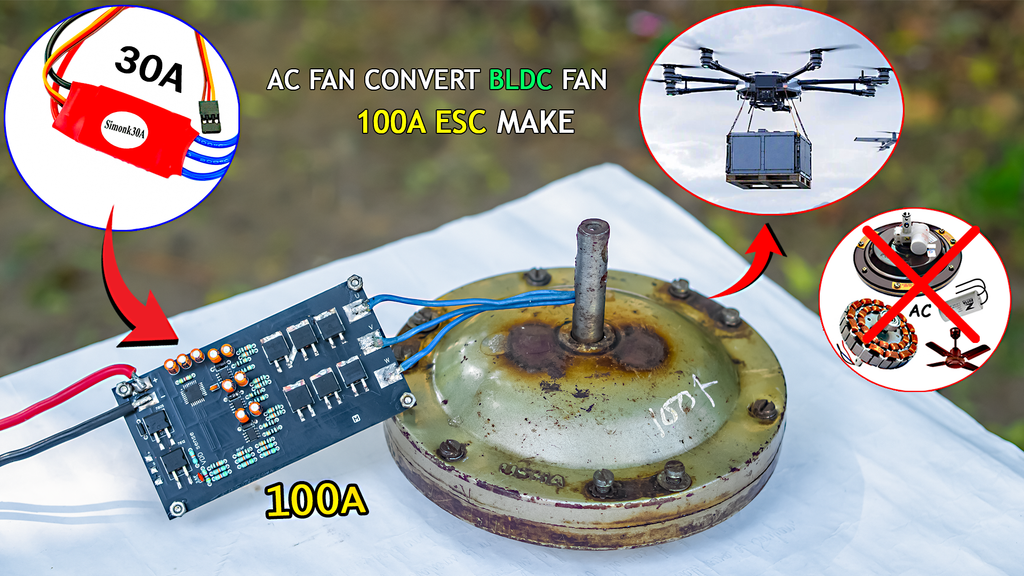
Yes, but not by simply adding a 100A ESC.
A standard ceiling fan uses an AC induction motor, while a BLDC fan uses a brushless DC motor with permanent magnets and an electronic controller. The motor construction is fundamentally different.
What would actually be required?
To convert a conventional fan to BLDC, you typically need:
- A BLDC motor or BLDC conversion kit.
- A BLDC driver/controller board.
- Permanent-magnet rotor components.
- Speed control electronics (often with a remote).
Commercial BLDC fan conversion kits are available and usually include the motor/controller parts needed for the conversion.
About using a 100A ESC
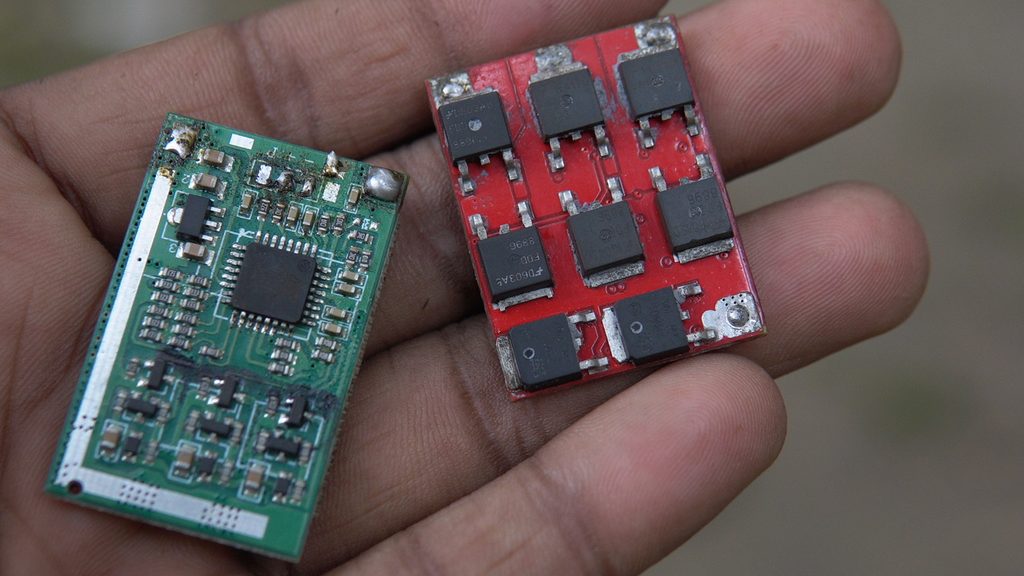
A 100A ESC (Electronic Speed Controller) commonly used for RC motors:
- Is generally not designed to run directly from household 230V AC mains.
- Requires an appropriate DC power source.
- Is not, by itself, enough to convert an induction motor into a BLDC motor.
Connecting a DIY ESC incorrectly to mains power can create serious shock and fire hazards.
Will it save 65% electricity?
A typical induction ceiling fan may consume around 70-80 W, while many BLDC ceiling fans operate around 25-35 W, so savings in the range of 55-65% are possible when comparing equivalent fans. [infobits.in], [karban.in]
Practical recommendation
For most people, the cheapest and safest approach is either:
- Buy a complete BLDC ceiling fan, or
- Use a purpose-built BLDC conversion kit designed for ceiling fans.
If you want, I can explain the electronics and motor modifications required for a true AC-induction-to-BLDC conversion at a high level.
GERBER FILE DOWNLOAD
…..****….
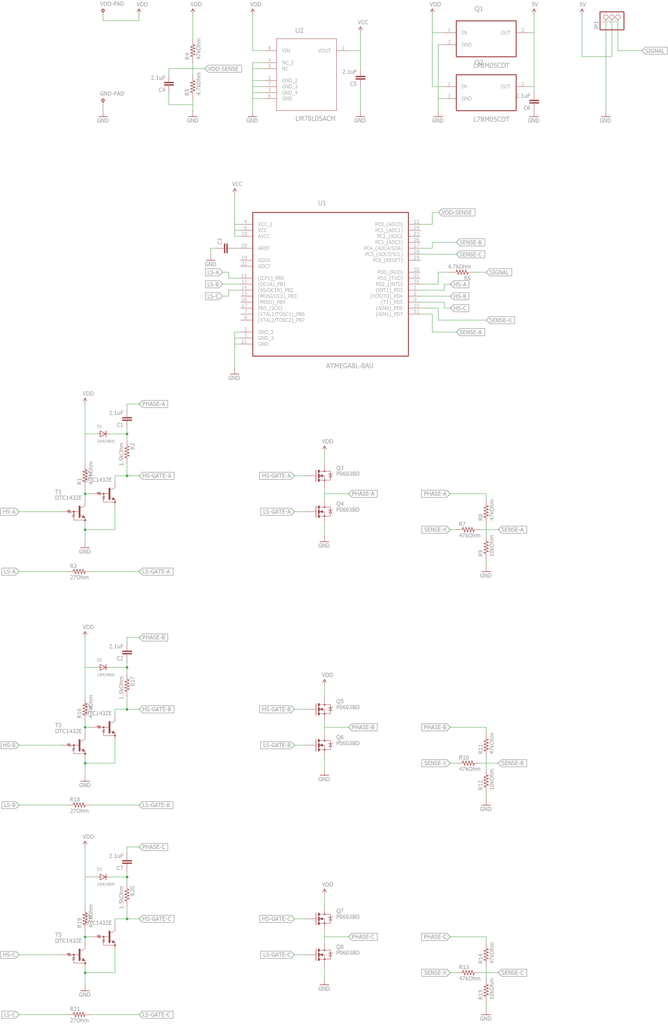
If you’re referring to SimonK firmware (often misspelled “Simonock”), then yes, people sometimes modify ESCs by:
- Replacing low-current MOSFETs with higher-current devices.
- Improving PCB copper paths or adding copper wire reinforcement.
- Upgrading capacitors and gate-driver circuitry.
- Reflashing ESC firmware (SimonK or BLHeli).
However, flashing SimonK firmware does not turn a 30A ESC into a true 100A ESC by itself. The current rating is determined primarily by the ESC’s hardware: MOSFETs, gate drivers, PCB traces, capacitors, cooling, and power connectors.
For MCU projects, a modified 30A ESC may handle somewhat higher current if the hardware is upgraded properly, but calling it a “100A ESC” requires verifying that:
- The MOSFETs can safely carry 100A.
- The PCB can handle the current without overheating.
- Adequate heatsinking and cooling are provided.
- Current and temperature testing confirms operation under load.
Without those hardware changes and testing, a firmware-modified 30A ESC remains essentially a 30A-class ESC.
If you’re looking at a specific “30A to 100A ESC make at home” video, I can help analyze the circuit and explain which modifications are actually increasing current capability and which claims are likely exaggerated.